PCOS and Trying to Conceive: A Complete Guide to Improving Your Fertility Naturally


PCOS and Trying to Conceive: A Complete Guide to Improving Your Fertility Naturally
Polycystic ovary syndrome (PCOS) is the most common hormonal condition in women of reproductive age, affecting approximately 1 in 10 women across Europe. It is also the leading identifiable cause of anovulatory infertility—infertility caused by irregular or absent ovulation. For the millions of women with PCOS who want to become pregnant, the journey to conception can feel uncertain and overwhelming.
The good news: PCOS is highly manageable, and the vast majority of women with this condition can and do conceive—many through lifestyle interventions alone. This comprehensive guide explains how PCOS affects fertility, what you can do to improve ovulation naturally, and how to work with your body rather than against it when trying to conceive.
Understanding PCOS: What Is Actually Happening in Your Body
PCOS is characterised by a combination of features that include irregular or absent periods (oligomenorrhoea or amenorrhoea), elevated androgen levels (testosterone and DHEA-S), and polycystic-appearing ovaries on ultrasound—meaning the ovaries contain multiple small follicles that fail to mature and release an egg normally.
At its core, PCOS involves a disruption in the hormonal cascade that normally drives ovulation each cycle. Elevated insulin (common in PCOS, even in lean women) stimulates the ovaries to produce excess androgens. High androgens interfere with follicular maturation. The result is follicles that develop partway but stall—never releasing an egg. This is anovulation.
Without ovulation, there is no egg to fertilise, progesterone levels do not rise after mid-cycle, and the cycle often extends or becomes irregular. For many women with PCOS, this means cycles that range from 35 to 90+ days, or even months without a period.
The PCOS-Fertility Connection: Why Timing Becomes Complex
Ready to give your fertility the support it deserves?
For women with regular 28-day cycles, identifying the fertile window is relatively straightforward. For women with PCOS and irregular cycles, it is significantly more challenging:
- Ovulation day varies widely cycle to cycle
- Some cycles may be anovulatory (no ovulation at all)
- LH levels are often chronically elevated in PCOS, making standard OPK tests less reliable
- Cervical mucus patterns may be less consistent
This is why fertility tracking is especially important for women with PCOS—and why the tracking methods need to be adapted to account for PCOS-specific hormonal patterns.
Natural Strategies to Improve Ovulation With PCOS
1. Nutrition: The Anti-Androgenic, Insulin-Sensitising Diet
Diet is one of the most powerful levers for PCOS management. The goal is to reduce insulin resistance—the core metabolic driver of most PCOS presentations:
- Lower glycaemic index carbohydrates: Replace white rice, bread, and pasta with quinoa, legumes, sweet potato, and oats. Lower GI foods produce smaller insulin spikes.
- Increase fibre: Dietary fibre slows glucose absorption and improves insulin sensitivity. Aim for 25–30g per day from vegetables, legumes, and whole grains.
- Quality proteins: Adequate protein (0.8–1.2g per kg body weight) from fish, eggs, legumes, and lean meat stabilises blood sugar and supports hormone production.
- Anti-inflammatory fats: Omega-3 fatty acids from oily fish, flaxseed, and walnuts reduce systemic inflammation, which is elevated in PCOS.
- Limit processed foods, sugar, and refined carbohydrates: These drive insulin spikes that exacerbate androgen production.
Research shows that adopting a low-GI Mediterranean-style diet in women with PCOS leads to improved menstrual regularity, reduced androgen levels, and—critically for those TTC—improved ovulation rates.
2. Exercise: The Right Type and Amount
Exercise improves insulin sensitivity and helps normalise the hormonal environment in PCOS. Key points:
- Resistance training (2–3 times per week): Building muscle tissue improves glucose uptake and insulin sensitivity more effectively than cardio alone.
- Moderate-intensity aerobic exercise: 150 minutes per week of walking, swimming, or cycling improves metabolic markers in PCOS.
- Avoid overtraining: Excessive high-intensity exercise can itself disrupt ovulation by triggering a stress hormone response. Moderate, consistent activity is the goal.
3. Weight Management: Even Small Changes Matter
For women with PCOS who are above their healthy weight range, even a modest weight reduction of 5–10% of body weight has been shown to restore ovulation in a significant proportion of women, improve menstrual regularity, and reduce androgen levels. This is not about achieving an "ideal" BMI—it is about the metabolic effect of reducing visceral fat and improving insulin sensitivity.
Important: PCOS affects women of all weights. Lean PCOS is common, and weight loss is not appropriate or relevant for all women with this condition. Work with a dietitian or endocrinologist for personalised guidance.
4. Inositol Supplementation
Inositol—specifically the combination of myo-inositol and D-chiro-inositol at a 40:1 ratio—is one of the most evidence-supported supplements for PCOS. It improves insulin signalling, reduces androgen levels, and has been shown in multiple randomised controlled trials to restore ovulation in women with PCOS. Dose: 2g myo-inositol + 50mg D-chiro-inositol twice daily. Benefits typically become apparent over 3–6 months of consistent use.
5. Vitamin D Optimisation
Vitamin D deficiency is significantly more prevalent in women with PCOS than in the general population, and low vitamin D is associated with more severe PCOS features and lower fertility. Testing and correcting vitamin D deficiency (target serum level: 100–150 nmol/L) can improve insulin sensitivity, reduce androgen levels, and improve menstrual regularity.
6. Omega-3 Fatty Acids
Omega-3 supplementation in PCOS has been shown to reduce triglycerides (often elevated in PCOS), lower free testosterone levels, improve menstrual regularity, and reduce inflammation. Aim for 2g EPA+DHA daily from fish oil or algae-based supplements.
7. Stress Management
Chronic psychological stress activates the HPA (hypothalamic-pituitary-adrenal) axis, driving cortisol and DHEA-S production—both of which can worsen androgen levels and disrupt ovulation in PCOS. Mindfulness, yoga, adequate sleep, and reducing overcommitment are not "soft" interventions—they are biologically meaningful for PCOS fertility.
Fertility Tracking With PCOS: Adapted Methods
Standard OPKs are less reliable in PCOS due to elevated baseline LH. Better options:
- Quantitative LH tracking (Mira fertility monitor): Shows actual LH numbers rather than a positive/negative threshold—allows women with PCOS to see their relative LH rise even from an elevated baseline.
- BBT charting: Still useful for confirming ovulation occurred (progesterone-driven temperature rise). Requires patience and multiple cycles to interpret in the context of irregular cycles.
- Progesterone blood test (day 21 or 7 days post-ovulation): Confirms whether ovulation actually occurred. Ask your GP or gynaecologist for a mid-luteal progesterone test.
- Ultrasound follicle tracking: The gold standard for PCOS fertility monitoring. A follicle scan confirms follicular development and the collapse that follows ovulation.
Conceive Plus Lubricant: Supporting Sperm During the PCOS Fertile Window
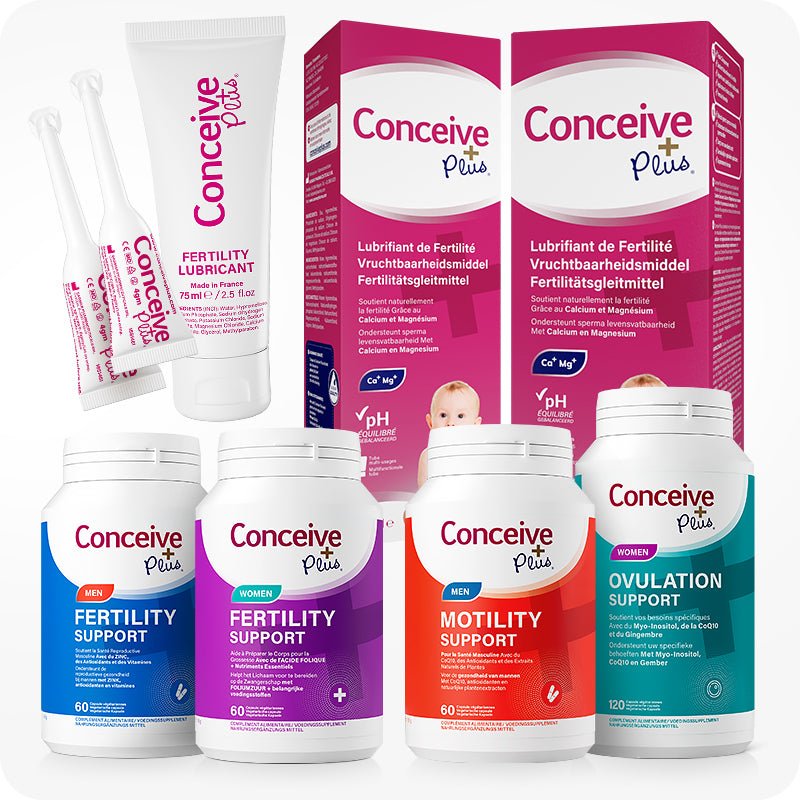
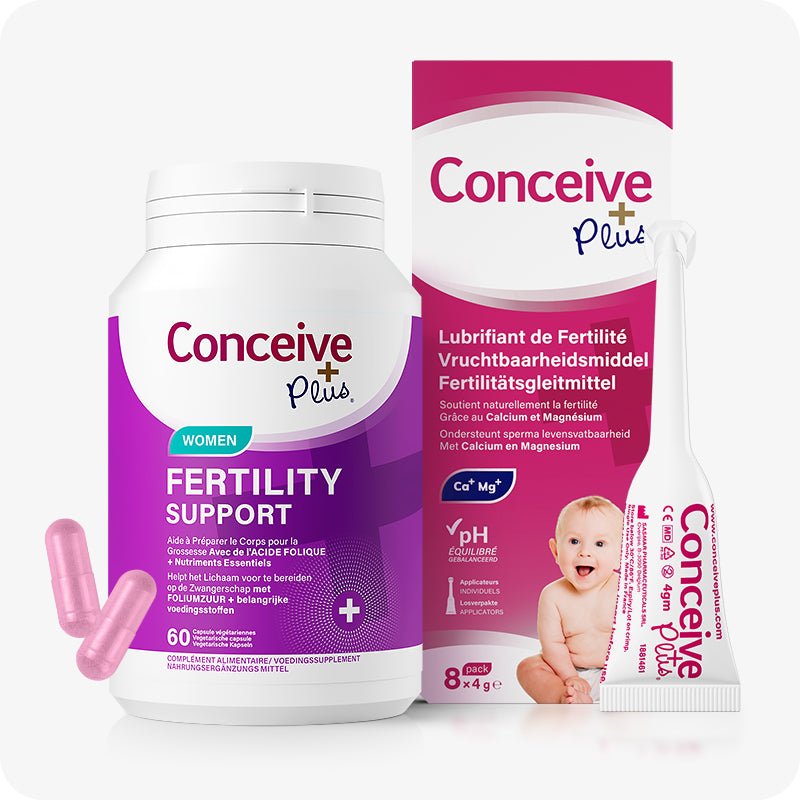
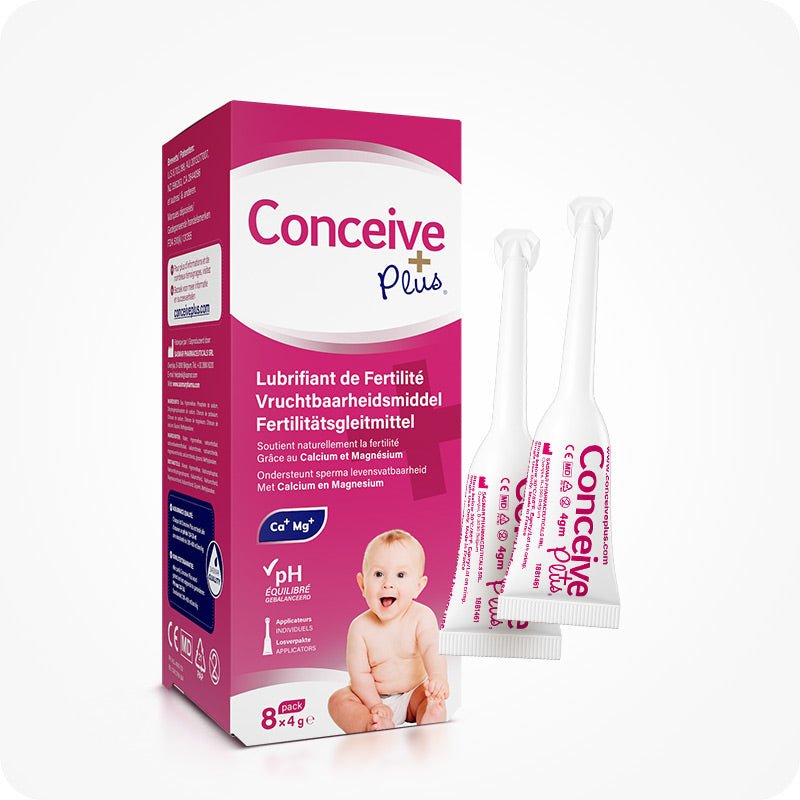
When ovulation does occur in PCOS cycles, you want every possible advantage on your side. Many women with PCOS report reduced cervical mucus quality, partly due to hormonal imbalances. Conceive Plus fertility lubricant provides a physiologically matched environment—the right pH, osmolality, and ionic composition—to protect sperm function during intercourse in the fertile window.
Conceive Plus is free from ingredients that harm sperm, contains calcium and magnesium ions that support sperm capacitation, and is FDA-cleared for use while trying to conceive. It is a straightforward, science-backed addition to your PCOS fertility toolkit.
When to Seek Medical Support
Lifestyle changes can be highly effective for PCOS fertility, but there are situations where medical intervention is appropriate:
- You have been trying to conceive for 12+ months with irregular cycles (or 6+ months if over 35)
- Lifestyle changes over 6 months have not restored regular ovulation
- You have additional fertility factors (partner sperm issues, blocked tubes, significant endometriosis)
- Your cycles are very irregular (60+ days) or absent
Medical options include ovulation induction with letrozole (now considered first-line for PCOS) or clomiphene, metformin, laparoscopic ovarian drilling, and IVF. These are effective options and should not be delayed unnecessarily if natural approaches have been given adequate time.
Frequently Asked Questions: PCOS and Trying to Conceive
Q: Can women with PCOS conceive naturally?
Yes. The majority of women with PCOS do conceive—many without medical intervention. The key is identifying when (or whether) ovulation is occurring and either timing intercourse to that window or using lifestyle strategies to restore regular ovulation.
Q: Does PCOS cause miscarriage?
PCOS is associated with slightly higher miscarriage rates, partly due to the hormonal and metabolic environment. Optimising insulin sensitivity, achieving adequate vitamin D levels, and using folic acid/folate supplementation before conception may reduce this risk.
Q: How long does it take to restore ovulation through lifestyle changes?
Significant menstrual cycle improvement from diet and exercise is typically seen within 3–6 months of consistent change. Inositol supplementation may take 3–6 months to show full benefit. Some women respond faster; others take longer.
Q: Does the contraceptive pill mask PCOS?
Yes. The pill suppresses ovulation and provides synthetic hormones that create regular withdrawal bleeds, masking the underlying cycle irregularity. Many women only discover they have PCOS after coming off the pill when natural cycles fail to return regularly. The pill does not treat PCOS—it temporarily manages symptoms.
Q: Are ovulation tests reliable for PCOS?
Standard threshold-based OPKs are often unreliable for PCOS due to elevated baseline LH causing false positives. Quantitative LH monitors (Mira) or progesterone blood tests are more reliable for confirming ovulation in this context.
Q: Is inositol safe to take while trying to conceive?
Yes. Myo-inositol is a naturally occurring compound found in foods, and studies in PCOS and TTC populations show a strong safety profile. It is appropriate to continue during the TWW and into early pregnancy, and some research suggests potential benefits for egg quality in IVF cycles.
Q: What is the best diet for PCOS fertility?
A low-GI, anti-inflammatory diet—similar to the Mediterranean dietary pattern—is consistently supported by research for PCOS. Emphasis on vegetables, legumes, whole grains, oily fish, olive oil, and limited processed foods and sugar.
Summary
PCOS does not mean infertility. With the right combination of lifestyle strategies, nutritional support, and fertility awareness, most women with PCOS can improve their ovulatory function and conceive. Start with diet and exercise, add evidence-based supplements like inositol and vitamin D, track your cycle with adapted methods, and use fertility tools like Conceive Plus during your fertile window to optimise every attempt.
Visit conceiveplus.eu for fertility lubricants and supplements tailored to support your conception journey across Europe.
Trusted by hundreds of thousands of couples worldwide.